In classrooms across the United States, something subtle but powerful is changing how students learn, plan, and succeed. Late-night stress over unfinished assignments, forgotten deadlines, and overloaded study schedules is slowly being replaced by intelligent systems that seem to “understand” students better than ever before. At the center of this shift is the growing influence of the ai study planner for students 2026, a technology that is reshaping academic life in ways many never expected just a few years ago. For students feeling overwhelmed by pressure and time management struggles, this innovation feels less like software and more like a personal academic assistant that never sleeps.
The Rise of AI-Powered Learning in American Education
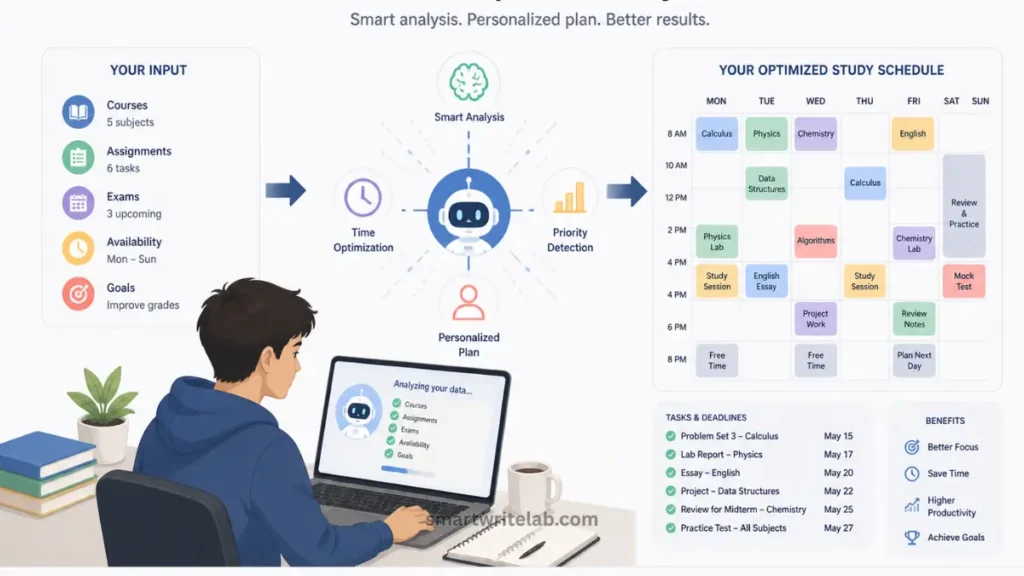
Across the United States, schools and universities are rapidly integrating smart tools that rely on adaptive learning systems and machine intelligence. The ai study planner for students 2026 is becoming a core part of this transformation, helping students organize their academic lives with precision. Instead of static calendars or basic reminders, these planners analyze workload, learning speed, and even attention patterns to build personalized study paths. Educators are calling this shift one of the biggest upgrades in modern education technology 2026, especially as schools aim to improve performance and reduce student burnout.
What makes this evolution even more significant is how naturally students are adopting it. Unlike traditional smart scheduling apps, these AI-driven systems feel intuitive and responsive. They adjust in real time when a student falls behind or completes tasks early. In many pilot programs, teachers report improved consistency in study habits and stronger academic engagement. As demand grows for digital classroom tools and student productivity apps, the ai study planner for students 2026 is quickly becoming a standard rather than an experiment.
How AI Study Planners Are Changing Daily Study Habits
The core strength of the ai study planner for students 2026 lies in its ability to personalize learning like never before. Using adaptive learning AI, these systems break down complex subjects into manageable sessions based on a student’s pace and performance history. Instead of overwhelming to-do lists, students receive structured daily plans that adjust automatically. This creates a smoother workflow and reduces procrastination, especially for high school and college learners balancing multiple subjects at once.
Another key feature is integration with study time management apps and AI tutoring systems, which provide real-time feedback and reminders. If a student struggles with math concepts or delays an assignment, the system reorganizes their schedule to prioritize weaker areas. This dynamic approach ensures continuous improvement instead of last-minute cramming. The ai study planner for students 2026 is not just about planning—it is about guiding students through smarter academic decisions every day.
Why Students and Teachers Are Embracing AI Learning Tools
One of the biggest advantages of the ai study planner for students 2026 is its impact on productivity. Students who once struggled with time management are now reporting clearer focus and reduced academic stress. With features similar to advanced exam preparation apps, these planners help break down exam goals into daily targets, making large academic challenges feel more achievable. This structured approach is especially valuable during exam seasons when pressure is at its highest.
Teachers are also seeing positive changes in classroom performance. By using insights generated from digital classroom tools, educators can better understand student progress and adjust teaching methods accordingly. The ai study planner for students 2026 acts as a bridge between students and teachers, creating a more connected learning environment. As a result, engagement levels are rising, and students are participating more actively in academic discussions and assignments.
Concerns Around AI in Education and Student Privacy
Despite its benefits, the rapid growth of the ai study planner for students 2026 has raised important questions about privacy and data security. Since these systems rely on collecting learning behavior data, concerns have emerged about how securely this information is stored and used. Parents and schools are especially cautious about ensuring that sensitive student data is not misused or shared without consent.
Another concern is over-dependence on technology. While student productivity apps powered by AI can improve efficiency, some educators worry that students may become too reliant on automated systems. This could reduce independent thinking skills if not balanced properly. However, developers argue that these tools are designed to support—not replace—human learning, and ongoing improvements in machine learning education aim to keep that balance intact.
The Future of AI Study Planning in 2026 and Beyond
Looking ahead, experts predict that the ai study planner for students 2026 will evolve into even more advanced systems capable of predicting academic outcomes. With deeper integration of AI tutoring systems and behavioral analytics, future planners may be able to identify struggling students before grades begin to drop. This predictive capability could transform how schools approach intervention and support.
There is also growing interest in combining these tools with immersive learning environments such as virtual classrooms and augmented reality lessons. As education technology 2026 continues to advance, the role of AI in shaping personalized education will only expand. Many analysts believe that within a few years, every student in the U.S. will have access to a digital learning companion powered by artificial intelligence.
Conclusion: A New Era of Smarter Student Success
The rise of the ai study planner for students 2026 marks a turning point in how education is experienced in the United States. What was once a simple schedule is now becoming an intelligent system that adapts, learns, and grows with each student. As schools continue adopting adaptive learning AI, study time management apps, and advanced digital classroom tools, the future of education looks more personalized and efficient than ever before.
For students, this is more than just a technological upgrade—it is a new way of learning that reduces stress and improves outcomes. The next step belongs to those who embrace it early and learn how to use it effectively. Explore, adapt, and stay ahead, because the future of studying is already here.