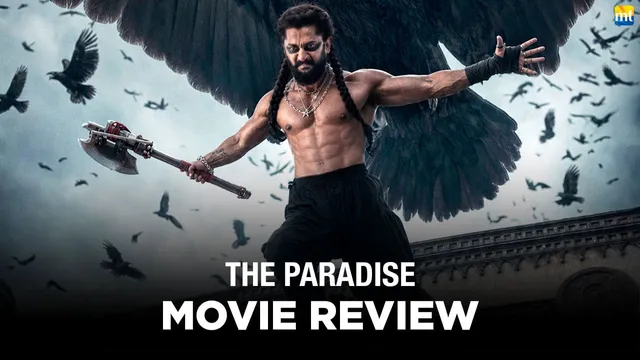
The paradise movie brings Nani into a powerful period action drama set in 1980s Secunderabad, featuring action, social conflict, and a compelling story.
Introduction
Indian cinema regularly produces action films, but some projects stand out because they combine large-scale entertainment with a deeper social story. The Paradise movie is one such Telugu-language period action drama, directed by Srikanth Odela and led by Nani. The film takes viewers back to 1980s Secunderabad, where a marginalized community faces discrimination and struggles for recognition, dignity, and citizenship.
Released in September 2026, the movie has attracted attention because of its unusual setting, intense atmosphere, strong cast, and ambitious subject. Rather than presenting a simple hero-versus-villain story, the film connects personal conflict with a larger struggle involving identity, power, and social inequality.
This article covers the story premise, cast, director, music, setting, release information, themes, visual style, audience expectations, and frequently asked questions.
The Paradise Movie Story and Setting
The story is set in 1980s Secunderabad, giving the film a period backdrop that plays an important role in its narrative. According to the published synopsis, a marginalized tribe faces discrimination while fighting for legal recognition and citizenship under the leadership of an unexpected figure.
Nani plays Jadal, the central character around whom much of the story develops. His character is presented as someone who becomes connected with the wider struggle of his community. Instead of focusing only on personal ambition, the narrative places Jadal in a difficult environment where survival, dignity, and social recognition become important motivations.
The setting also helps separate the movie from a conventional modern-day action film. The 1980s environment provides opportunities for distinctive costumes, production design, locations, and social circumstances. The period setting can make the conflicts feel more grounded because the characters operate within a very different social and political environment.
Nani as Jadal
Nani plays the lead role of Jadal, making the character one of the main attractions of the project. Known for working across different genres, Nani takes on a role that requires both action-oriented performance and emotional intensity.
Jadal is not simply presented as an isolated action hero. The character is connected to a community facing discrimination, which gives his journey a broader purpose. His position gradually develops into one of leadership, creating tension between personal safety and collective responsibility.
This type of character allows Nani to explore a more intense side of his acting. The film’s promotional material and available descriptions emphasize the character’s connection to resistance and social struggle rather than presenting him only through conventional hero moments.
The Supporting Cast
The movie features several established performers alongside Nani. Raghav Juyal plays Vikram Malik, while Kayadu Lohar is also part of the principal cast. Other names associated with the film include Mohan Babu, Sonali Kulkarni, Keerthy Suresh, Easwari Rao, Sampoornesh Babu, and Tanikella Bharani.
Raghav Juyal’s presence is particularly interesting because audiences may recognize him from his work in dance and acting. His character creates another important layer within the film’s conflict.
Mohan Babu and Sonali Kulkarni add further experience to the ensemble, while the remaining supporting performers contribute to the wider world surrounding Jadal.
A large supporting cast can be especially useful in a period drama because the story often requires different groups, relationships, and opposing interests rather than relying entirely on the main character.
Director Srikanth Odela
Srikanth Odela directs the film and is also credited among its writers. The screenplay and dialogue credits include Srikanth Odela, Thota Srinivas, and Vinay Sagar Jonnala, with additional writing credits listed in the production information.
Odela’s approach to the project is centered around a period setting and a socially focused story. The combination of action and drama means the director has to balance large-scale sequences with character development.
The film is therefore not built only around action scenes. Its premise depends on understanding why the characters are fighting and what their struggle represents to the community around them.
For viewers who enjoy Indian action dramas with historical or period settings, this combination may be one of the most interesting aspects of the production.
Action and Drama Elements
Action is an important part of the movie’s identity. It is categorized as an action, adventure, and drama film, with thriller elements also appearing in several databases.
However, the action is connected to the film’s larger social conflict. The central characters are dealing with discrimination, power struggles, and questions of identity, meaning that physical confrontations are part of a broader narrative.
This balance can make action sequences more meaningful than scenes that exist only for spectacle. When an audience understands what a character is protecting or fighting against, even a straightforward confrontation can carry greater emotional weight.
At the same time, viewers should expect a serious tone. The film has received an adult certification in India, and reports before release noted that the censor process involved cuts to certain violent imagery.
Music and Technical Team
Music is another major part of the production. Anirudh Ravichander is credited as the composer, while Ch Sai is the cinematographer and Navin Nooli is the editor.
Anirudh’s involvement is significant for audiences who follow contemporary Indian film music. A strong background score can play an important role in a movie that depends on tension, action, and emotional escalation.
Cinematography is equally important for a period film. The visual team has to recreate the atmosphere of 1980s Secunderabad while making action sequences clear and energetic.
Editing also matters because the movie reportedly has a runtime of roughly two hours and forty-five minutes. A long runtime requires careful pacing so that dramatic sections, character moments, and action sequences work together rather than feeling disconnected.
Release Date and Theatrical Experience
The film was released theatrically in September 2026. Major listings show September 24, 2026 as the release date, although release dates can differ by territory and platform.
The movie is available in multiple formats in India, with listings mentioning options such as 2D, EPIQ, Dolby Cinema 2D, and 4DX.
For viewers who enjoy large action sequences, a theatrical presentation can offer a different experience from watching a movie on a small screen. The sound design, music, cinematography, and action scenes are designed to work as part of a large cinematic presentation.
Those planning to watch it should check local cinema listings because showtimes, language versions, and formats can vary by location.
What Makes the Film Different?
Several elements give the film a distinctive identity.
1. A Period Setting
The 1980s Secunderabad setting creates a visual and cultural background that separates the film from many contemporary action movies.
2. A Socially Focused Story
The central conflict involves discrimination, identity, citizenship, and the struggle for dignity. These subjects give the action a wider context.
3. A Different Lead Character
Jadal’s journey is connected to his community. His development as an unexpected leader forms an important part of the story.
4. A Large Ensemble
The movie combines Nani with actors such as Raghav Juyal, Kayadu Lohar, Mohan Babu, Sonali Kulkarni, and others, giving the story several supporting characters.
5. Strong Technical Talent
The project brings together director Srikanth Odela, composer Anirudh Ravichander, cinematographer Ch Sai, and editor Navin Nooli.
Critical and Audience Response
Because the film has only recently reached theaters, reviews and audience reactions are still developing. Current Rotten Tomatoes data shows a small number of critic reviews alongside audience ratings, while Indian ticketing platforms are also displaying user ratings.
Early critical responses have not been completely uniform. Some reviews have highlighted the film’s ambition, performances, action, and social themes, while other reviews have raised concerns about the balance between its ideas and storytelling.
That difference is useful for potential viewers because it shows that the movie may appeal differently depending on what someone expects from it. People looking primarily for action may focus on the large-scale sequences, while viewers interested in social drama may pay more attention to the characters and central conflict.
It is therefore better to consider several reviews and audience reactions rather than relying on one rating alone.
Where Can You Watch It?
As of the current theatrical release period, the film is playing in cinemas. Streaming availability has not been broadly announced yet, and JustWatch currently lists the streaming release as not announced in the United States.
This means viewers looking for the movie online should be careful with unofficial websites and misleading videos claiming to offer a full version. Search results can sometimes contain unauthorized uploads or inaccurate titles.
For a legitimate viewing experience, audiences should check official cinema listings and, once announced, the authorized streaming service carrying the film.
Why the 1980s Setting Matters
A period setting is not simply a decorative choice. It can influence the way characters communicate, dress, travel, work, and interact with institutions.
In this film, the 1980s backdrop is closely connected to the social circumstances surrounding Jadal and his community. It gives the story a specific historical atmosphere rather than making the conflict feel like it could happen anywhere at any time.
For filmmakers, period stories also create additional production challenges. Sets, costumes, props, vehicles, locations, and visual details must work together to make the world believable.
When these elements are successful, they can help viewers become immersed in the story.
What Type of Viewer May Enjoy It?
The movie may interest viewers who enjoy:
- Telugu action dramas
- Nani’s performances
- Period films
- Socially themed cinema
- Large-scale action sequences
- Intense character-driven stories
- Anirudh Ravichander’s music
- Indian films with darker dramatic tones
Viewers who prefer light romantic comedies or simple family entertainment may find the film’s serious subject matter and violent action different from those expectations.
FAQ About the Film
What is the story about?
The story follows Jadal, played by Nani, in 1980s Secunderabad. He becomes connected with a marginalized community’s struggle against discrimination and its fight for recognition and citizenship.
Who directed the film?
The movie was directed by Srikanth Odela, who is also credited among the writers.
Who plays the lead role?
Nani plays the central character Jadal. Raghav Juyal, Kayadu Lohar, Mohan Babu, Sonali Kulkarni, Keerthy Suresh, and other performers are also part of the cast.
When was the movie released?
The film’s major theatrical release date is listed as September 24, 2026, with territory-specific release schedules varying in some markets.
Is the movie available on streaming platforms?
A confirmed streaming release has not been broadly announced yet. Current streaming trackers continue to list the online release as pending in some territories.
What language is the movie in?
The original language is Telugu. Listings also show the film being distributed in multiple dubbed or subtitled language versions.
Conclusion
The Paradise is a large-scale Telugu period action drama that combines Nani’s lead performance with a socially focused story set in 1980s Secunderabad. Its narrative explores discrimination, identity, citizenship, leadership, and the struggle for dignity while using action and drama to move the story forward.
The film also benefits from an experienced technical team, including director Srikanth Odela, composer Anirudh Ravichander, cinematographer Ch Sai, and editor Navin Nooli.
For audiences interested in Indian action cinema with a period setting and serious social themes, the movie offers plenty to explore. Its reception is still developing following its recent theatrical release, so viewers may want to consider both professional reviews and audience reactions before deciding how they want to experience it.