
Have you ever been driving on Pakistan’s smooth motorway and wondered just how fast you can legally go? You’re not alone. With frequent changes in speed regulations over the past year, keeping up with the current Pakistan motorway speed limit has become a hot topic for commuters and long-distance travelers alike. Recently, there have been significant shifts—from temporary reductions to a restoration of previous limits. If you want to avoid hefty fines and stay safe on the road, this complete guide covers everything you need to know about Pakistan’s motorway speed limits.
What is the Current Pakistan Motorway Speed Limit?
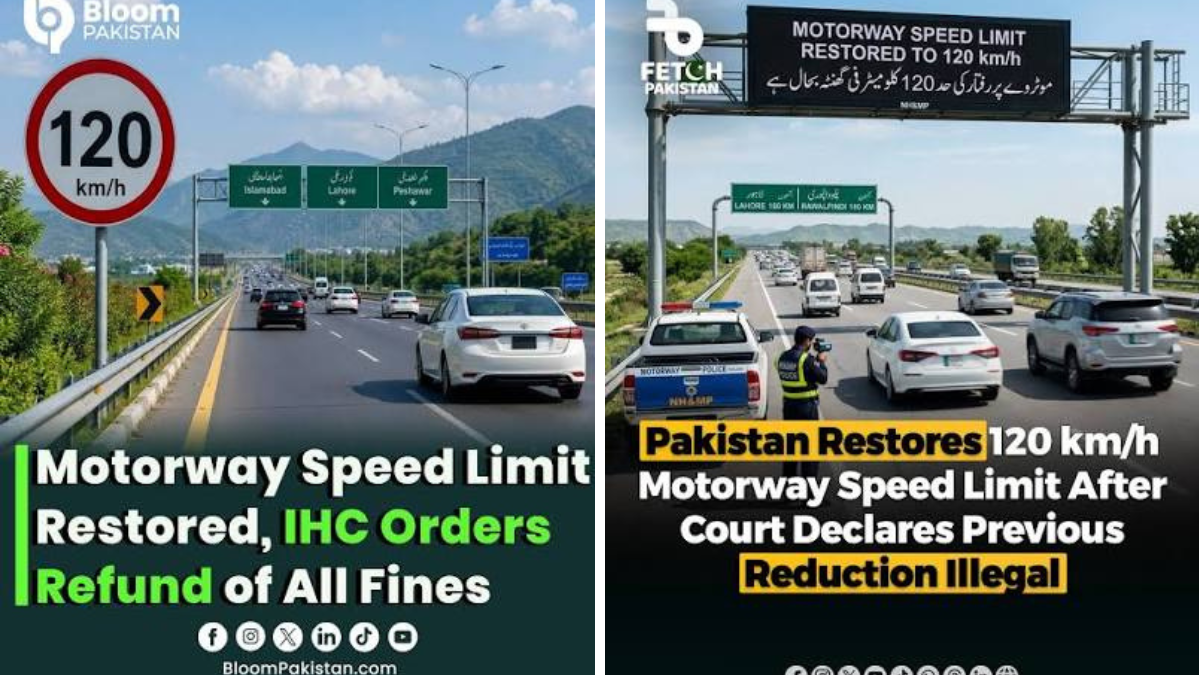
In a move that was welcomed by motorists nationwide, the government officially restored the original speed limits in June 2026. This decision reversed the temporary reductions that were put in place earlier in the year to conserve fuel. So, what does this mean for you when you hit the highway?
Speed Limit for Cars and Light Transport Vehicles
For everyday drivers, the news is good. The Pakistan motorway speed limit for motor cars and Light Transport Vehicles (LTVs) is now set at 120 kilometers per hour (km/h) .
Speed Limit for Heavy Transport and Public Service Vehicles
For heavier vehicles, the rules are slightly different. The Pakistan motorway speed limit for Heavy Transport Vehicles (HTVs) and Public Service Vehicles (PSVs), such as buses and large trucks, is 110 km/h .
Speed Limits on National Highways
It’s important to remember that these speeds apply specifically to motorways. If you transition onto a national highway, the speed limits are lower:
A Quick History: Earlier in 2026, these limits were reduced to 100 km/h for cars on motorways as part of a fuel-saving campaign . However, following directives from the government and even a court ruling, the previous limits were reinstated . The police confirmed the restoration in late June 2026 .
Why Speed Limits Exist: Safety vs. Fuel
Speed limits aren’t just arbitrary numbers. They are carefully calculated to balance different needs.
Safety: This is the primary reason for speed limits. Pakistan’s motorways are generally well-built, but higher speeds reduce reaction time. The Motorway Police frequently launch campaigns against over-speeding because excess speed is a leading cause of fatal accidents .
Fuel Efficiency: For a few months in 2026, the limits were lowered to 100 km/h for cars to save fuel. This was a government response to the global energy crisis. While those limits are gone, it showed how speed directly impacts national fuel consumption .
Fines and Penalties for Over-Speeding in Pakistan
Exceeding the Pakistan motorway speed limit can be an expensive mistake. The Motorway Police are strict, and they have tools like speed cameras to catch violators.
Here are the penalties you need to know about:
- Standard Over-speeding Fine: If caught driving above the limit, you can expect a fine of at least Rs. 2,000 .
- Motorcyclists, Cars, and LTVs: For exceeding the speed limit, the fine is Rs. 5,000 .
- HTVs and PSVs: For heavy vehicles, the fine for speeding goes up to Rs. 10,000 .
Serious Violations (Extreme Speeding)
The police take extreme speeding very seriously. If you are caught driving at speeds exceeding 150 km/h, you are not just looking at a fine. The Motorway Police have the authority to:
- Register a First Information Report (FIR) against you .
- Impound your vehicle .
- Ban you from entering the motorway .
Why Speed Limits Change: The 2026 Rollercoaster
Understanding the context helps you appreciate the current rules.
- The Reduction (March 2026): Pakistan faced a fuel crisis due to the Middle East conflict. To conserve fuel, the government reduced the Pakistan motorway speed limit for cars from 120 km/h to 100 km/h .
- The Legal Challenge: This decision was later challenged in court. The Islamabad High Court declared the reduction “illegal,” stating that there was no legal provision for lowering speed limits for fuel savings .
- The Restoration (June 2026): Following the court order and government directives, the Motorway Police officially restored the old speed limits of 120 km/h for cars .
Tips for Safe Driving on Pakistani Motorways
Knowing the limit is one thing; respecting it is another. Here are some tips to ensure your journey is both fast (but legal) and safe.
- Use Cruise Control: If your car has cruise control, use it. It prevents you from accidentally creeping over the 120 km/h limit.
- Lane Discipline: The left lane is for slow-moving traffic. The middle and right lanes are for overtaking. Wrong-lane violations can also lead to fines .
- Stay Alert: At 120 km/h, your reaction time needs to be sharp. Avoid distractions like mobile phones.
- Check Your Tyres: High speeds put pressure on tyres. Ensure they are properly inflated before hitting the motorway to avoid blowouts.
- Follow the Weather: In fog or heavy rain, even the 120 km/h limit is too fast. The Motorway Police often enforce lower limits in bad weather, so slow down for safety.
FAQs About Pakistan Motorway Speed Limit
What is the current Pakistan motorway speed limit for cars?
The current Pakistan motorway speed limit for cars and Light Transport Vehicles (LTVs) is 120 km/h .
Did the Pakistan motorway speed limit change in 2026?
Yes. The speed limit was lowered to 100 km/h in March 2026, but it was officially restored back to 120 km/h for cars in June 2026 .
What is the speed limit for buses and trucks on the motorway?
For heavy transport vehicles (HTVs) and public service vehicles (PSVs) like buses and trucks, the speed limit on motorways is 110 km/h .
What is the fine for over-speeding on a motorway in Pakistan?
The fine for over-speeding varies. For cars and LTVs, it is Rs. 5,000, while for heavy vehicles, it is Rs. 10,000. If caught driving at extreme speeds (above 150 km/h), FIRs can also be registered .
Conclusion
Staying informed about the Pakistan motorway speed limit is essential for every driver. As of June 2026, the rules are clear and back to normal: 120 km/h for cars and LTVs, and 110 km/h for heavy vehicles. These limits are designed to keep you safe while allowing you to reach your destination efficiently. Remember, the speed limit is a maximum, not a requirement—always drive according to the weather, road, and traffic conditions. Stay safe, follow the rules, and enjoy your journey on Pakistan’s modern motorways.